System design, decisions, diagrams, enterprise architecture.
16talks
146answers
0mainly about it
16new
DecJanFebMarAprMayJunJulAugSepOctNov
What your library answers 146
Why do unattended coding agents degrade codebase quality over time?
Unattended coding agents often focus purely on passing immediate tests without regard for good architecture or maintainability. Reinforcement learning relies on fast oracles, but code maintainability has no fast oracle to catch bad design decisions made by models. Consequently, codebases accumulate technical debt and slop that requires human intervention to clean up.
How did you approach building the backend message threading for Gmail?
Peter and the team utilized B-trees and inverted search indices to handle message threading and unread counts right from the start. This architecture supported fast lookups despite the constraints of early distributed systems.
How did Microsoft Windows become a gaming platform?
Early versions of Windows lacked the fast CPU pixel-filling and display negotiation needed for games, so developers like Chris Hecker created a skunkworks library called WinG to enable fast screen blitting. This unapproved graphics add-on served as the direct institutional and technical precursor to DirectX, which eventually established Windows as a dominant gaming platform. Although management volatility temporarily disrupted the project, it successfully proved that Windows could handle high-performance graphics.
Why do standard unit and integration test suites miss critical production bugs?
Standard test suites only check components in isolation and rely on situations developers have actively anticipated. Production failures are usually caused by environmental factors, weird timing, or complex interactions that engineers never thought to test for.
How can LLMs be applied to domain-driven design experiments?
Eric built an experimental pipeline using LLMs to look at code supposedly in a bounded context and extract its actually used language. This statistical approach helps overcome the brittleness of pre-LLM tools like stop-word lists and TF-IDF.
Can LLMs completely replace human on-call engineers today?
No, LLMs cannot currently carry a pager or fully handle incident response on their own. Despite unlimited tokens and proximity to researchers, reliability teams still rely heavily on human intervention for complex reasoning.
How did you start learning to code as a kid without money?
Mitchell started programming early as a teenager motivated by video games, teaching himself using online code and printouts of the PHP manual. Without money for professional books, he learned through freely available online resources and trial and error.
How do my old TDD habits help me work with AI agents?
Test-driven development practices provide the necessary framework for verifying whether AI-generated code is actually correct. Since powerful AI models act like unpredictable genies, having strict tests ensures you can catch mistakes and make sure the tool is doing the right thing.
Why should I avoid complex black-box agent frameworks?
Heavy abstraction layers can trap you deep in call stacks when you try to push past 80% reliability. Instead, owning your control flow and building software from first principles gives you the flexibility needed for production.
Why does the specs-to-code approach lead to poor code quality?
Repeatedly running a compiler or generator from a high-level specification without inspecting the code introduces software entropy. Each iteration adds complexity and drift, turning the code base into garbage rather than maintaining cleanliness.
How should I approach AI-driven legacy code migration?
Instead of feeding legacy code to a large language model in one step, break the migration down into structured steps. First create a comprehensive description of the application via reverse engineering, then use that description for forward engineering.
Why won't Nvidia get commoditized even if software gets commoditized?
Nvidia operates as the critical bridge transforming input electrons into valuable output tokens through deep engineering. Rather than doing everything itself, Nvidia partners across a vast supply chain ecosystem to handle the insanely hard transformation layer. This level of artistry and invention prevents the core hardware and software transformation from being easily commoditized.
How did Grady Booch first get into building computers and programming as a teenager?
Booch built his first calculator-like computer from individual transistors at age 12 after reading a library book on computer design. A few years later, he visited an IBM sales office in Amarillo, Texas, where a sales representative handed him a FORTRAN manual. He returned the next week with a working program modeling neutrons, earning him weekend time on an IBM 1130.
How should I use an AI agent to vet new product features?
You can feed an agent relevant context and external posts, letting it gather information, synthesize options, and propose features. However, you must use your product judgment to filter its recommendations because it may suggest unfeasible or unsustainable directions.
How do I practice systems thinking with an AI agent?
You can practice systems thinking by having an agent help you sketch out the components and architecture of apps you already use. Talk through how the application's pieces communicate and have the agent create visuals while you push back. This builds the mindset of designing systems before coding.
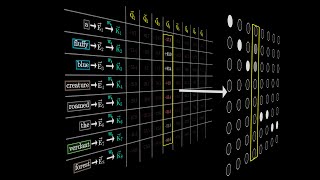
Why do initial token embeddings fail to capture word context?
Initial token embeddings act like a static lookup table that assigns the exact same vector to a word regardless of its surrounding text. Attention steps in afterward to allow surrounding embeddings to pass relevant context into that specific vector.
What does Slop Code Bench measure about modern AI models?
Slop Code Bench evaluates models by disclosing challenges in incremental bits and making the model write code iteratively over multiple features rather than solving the entire problem all at once. This mimics real-world software evolution and reveals that top models score relatively low on maintaining clean codebases over time. The benchmark demonstrates that unsupervised coding workflows still struggle significantly with long-term code quality.
Why did Colossus transition from traditional replication to Reed-Solomon erasure coding?
Traditional replication required storing three identical copies of data, which consumed excessive storage space. Reed-Solomon erasure coding allowed the system to store data much more efficiently while still allowing data reconstruction if multiple chunks were lost.
Why do most engineering teams and developers ignore software performance?
Developers often overlook performance because enterprise software purchasers care more about compliance and cost than speed, and monopoly network effects make responsiveness secondary to user acquisition. Furthermore, a general lack of awareness regarding hardware limits leads to poor benchmarking and bloated software budgets. However, recent trends show that startups using performance-based pitches are starting to gain traction against sluggish incumbents.
How do you specify high-level invariants for a massive distributed system without going crazy?
You start with a small number of basic properties like ensuring the system never crashes or times out. As you go deeper, you can turn formal API guarantees and written SLAs into automated test properties.
How does the domain language surveyor pipeline extract vocabulary?
The pipeline grabs random chunks of code, classifies them by domain, and uses an LLM to extract domain phrases. It then verifies terms against pure code, tokenizes them, and filters them with an LLM for relevance.
How do LLMs perform during the observation phase of an incident?
LLMs excel at superhuman signal gathering by querying metrics, reading logs, and finding needles in haystacks. They can run parallel PromQL queries rapidly and process thousands of log lines without getting tired.
How did you land your first programming job in college?
He landed his first job after blogging during his freshman year of college, which caught the attention of a Ruby on Rails consultancy looking for developers. Despite not knowing Ruby or Rails yet, he met with them in person and took the job, learning various technologies on the fly.
How should senior engineers approach the current wave of AI tools?
Senior engineers need to maintain absolute skepticism combined with relentless curiosity to properly evaluate new technologies. Instead of accepting hype or rejecting tech outright, you should run the smallest experiments possible to validate claims to your own satisfaction.
How should I handle tool use errors without breaking the model?
Blindly appending error stack traces to the context window causes agents to spin out and lose context. Instead, clear pending errors and summarize them so the model receives clean input for the next valid tool call.
Why is the idea that code is cheap misleading in the age of AI?
Bad code is actually more expensive than ever because it prevents you from leveraging the speed and power of AI. Maintaining a high-quality code base is essential because AI performs exceptionally well only within clean, structured environments.
How do agentic tools change day-to-day developer workflows?
Modern coding assistants now have autonomous access to multiple files and the terminal to execute tests and commands. This expands task sizes significantly, shifting developers into a managerial role where they oversee and guide these automated processes.
How does Nvidia secure multi-billion dollar upstream supply commitments?
Nvidia secures massive upstream commitments by directly informing, inspiring, and aligning with CEOs across the semiconductor supply chain. By sharing detailed reasoning about the immense future scale of the AI industry, Nvidia convinces partners to invest early. Because Nvidia's downstream demand and supply chain velocity are so large, suppliers are confident in making these massive capital investments.
What role did military projects play in the early history of software engineering?
Large military projects like the Sage system served as the crucible for modern distributed computing while exposing severe industry limitations. These complex systems consumed massive engineering resources, forcing the industry to confront what was termed the software crisis. This era also saw Margaret Hamilton coin the term software engineering to distinguish software from hardware work.
How do I protect my system from feature creep when using an agent?
You need to be extremely protective about bringing new abstractions into your system because removing primitives later is difficult due to user reliance and intertwined features. Ask the agent whether an existing primitive can handle the requirement before adding something new.
What does communicating intent effectively to an agent involve?
Communicating intent means focusing on the what and the why of a problem rather than the implementation details. You must clearly define the outcome, who it is for, and outline strict constraints. Failing to do this forces agents to guess, which leads to gaps and corners you cannot get out of.
How do query and key matrices work together to find relevant context?
Query matrices map noun embeddings to query vectors looking for preceding adjectives, while key matrices map adjective embeddings to matching key vectors. Computing dot products between these keys and queries produces a relevance score grid determining how much one word attends to another.
How can planning beforehand reduce rework when using coding agents?
Spending 20 to 30 minutes up front on planning and architecture drastically cuts down the time and friction required during code review. YOLO prompting with a two-sentence instruction usually results in a high probability of having to fix or rework code later. Writing a more detailed spec reduces the expected pain and likelihood of major agentic hallucinations.
Why are B-trees often preferred over binary trees for memory performance?
Standard balanced binary trees cause frequent cache misses because every node traversal jumps to a different cache line. B-trees improve spatial locality and reduce pointer overhead by packing multiple sorted items into a single node. This structure allows more compact storage and faster linear scans or binary searches over items.
How should I actually approach optimizing software performance?
True optimization requires identifying the theoretical peak capabilities of the underlying hardware and measuring the performance delta against your current implementation. Relying solely on a profiler to find big bottlenecks only traps you in local minima without knowing what the machine is truly capable of achieving. Calculating theoretical maximums also helps engineers discover hardware anomalies and continuously learn about modern CPU architectures.
Why do relaxed specifications make property-based tests more maintainable than traditional UI tests?
Traditional tests rely on rigid sequences of steps that break when completely incidental changes occur. Property testing checks general rules and invariants, meaning incidental updates like level layouts or timing don't automatically break your tests.
Why use random sampling instead of targeted code inspection?
Random sampling avoids human biases that lead us straight to where we think domain logic should be located. It ensures you find the domain logic wherever it actually resides in the codebase.
What pattern helps LLMs catch issues when an alert fires?
Instead of opening a blank chat, engineers should pass the alert's infrastructure-as-code expression directly to the AI agent. Instructing the agent to be curious allows it to quickly check endpoints, regions, and historical traffic patterns.
Why did you create Vagrant while working at the consultancy?
Vagrant was created to solve the problem of wasting billable hours setting up inconsistent development environments for short-term clients. By using free virtualization tools, he could quickly spin up reproducible local environments to help teams without wasting half a day on setup.
Will AI replace programmers or how will it affect different career stages?
AI acts as an amplifier rather than a wholesale replacement for developers. It creates a golden age for junior programmers who learn fast, while putting pressure on the middle tier who may struggle to find their footing amid broader economic headwinds.
Why are large context windows less reliable than controlled ones?
While massive context windows can accept millions of tokens, they yield noisier results compared to curated inputs. Controlling and limiting the tokens in your context window consistently produces tighter and higher-reliability outcomes.
How can I establish a shared design concept with an AI agent?
You can use a rigorous prompting skill like Grill Me to force the AI to interview you relentlessly about every aspect of the plan. This resolves dependencies across the design tree and ensures you and the AI share an invisible mental theory before writing code.
How can I perform forensics on legacy apps with missing source code?
You can combine existing coding assistants with custom Model Context Protocol servers and web scraping tools to monitor application behavior. For instance, putting triggers on database tables logs changes into audit tables that an AI agent can query dynamically.
Why is accelerated computing a broader market than narrow ASICs like TPUs?
Accelerated computing is designed to handle a vast diversity of workloads beyond AI, including molecular dynamics, data frames, and fluid dynamics. Because Nvidia systems are built to be flexible and operated by anyone, they can be deployed across every major cloud and on-premise environment. This massive versatility allows Nvidia to address applications and scientific research that specialized ASICs cannot handle.
How does Booch characterize the three golden ages of software engineering?
Software engineering evolved through three distinct golden ages driven by a continuous rise in abstraction levels. The first golden age focused on algorithmic abstractions to handle mathematical calculations using higher-order languages. The second golden age introduced object-oriented design and classes to manage exploding system complexity, while the third golden age shifts abstraction upward to entire packages, platforms, and frameworks.
How do I factor business sustainability and cost into agent-driven design?
Ask the agent how proposed features affect cost and entitlements to prevent users from abusing the system and exceeding revenue. For instance, storing data in durable objects versus object storage can lead to vastly different cloud infrastructure bills.
How do I verify that an agent builds what I actually intend?
Instead of reviewing raw code line by line, you should encode your intent directly into automated tests. Give the agent a mechanism for verifying its own work against those tests. This collaboration makes the agent much more effective at building the right thing.
What turns raw dot product scores into an attention pattern?
The raw dot products can range from negative infinity to infinity, so a softmax function is applied column by column. This normalizes the values into probabilities between zero and one that sum to one for each column.
What practical methods give AI agents backpressure during development?
Developers can provide agents with execution backpressure by giving them browsers, shell access with curl, or recording tools so they can independently test their changes. Additionally, adopting strict linter rules cataloged specifically against known AI anti-patterns prevents models from introducing sloppy syntax. Providing immediate operational feedback loops lets agents hill climb toward correct functionality.
How do distributed databases differ fundamentally from distributed storage systems?
Distributed storage systems like Colossus target large, immutable, append-only files such as 64-megabyte or gigabyte chunks. In contrast, distributed databases like Spanner manage relational tables with billions of typed rows and columns requiring frequent updates. Databases are typically built on top of distributed storage systems, using immutable files and log-structured merge trees to handle updates.
Why should I learn assembly language if I never write it?
Reading assembly is essential because it reveals the exact instructions the CPU is being asked to execute, unlike high-level languages which only show input to a compiler. It is surprisingly simple, requiring you to learn only a small subset of instructions that compilers actually output. Once you know it, you can read hardware architecture diagrams and understand CPU performance directly.
How does the hypervisor run unmodified Linux deterministically without modifying the kernel?
The hypervisor implements a deterministic machine model underneath standard Linux so operations always take predictable clock cycles. When the system attempts a non-deterministic call like getting a random number, the hypervisor traps it and returns a deterministic answer.
How do you prevent LLM hallucinations during vocabulary extraction?
The pipeline uses multiple verification steps with deterministic code to ensure every extracted term actually exists in the code sample. This prevents hallucinations from causing real problems downstream.
How can an LLM trace a request across distributed microservices?
You can instruct the model to use trace IDs to follow a request across disparate logging systems and clouds. Claude builds a coherent timeline in its context, helping identify where timeouts or errors occurred.
Why did HashiCorp bet on a multicloud strategy so early?
HashiCorp bet on a multicloud future despite AWS being the dominant player because they believed any economically massive market would naturally attract competitors. Their conviction was that other tech giants like Microsoft and Google would inevitably enter the cloud space, making cloud-agnostic tools necessary.
What are the major risks enterprises face when adopting AI agents?
Large enterprises face massive security risks when blindly granting AI models autonomous control over sensitive systems like email. The rush to deploy unvetted agents in complex legacy codebases invites catastrophic failures that could easily take critical infrastructure offline.
How do I manage execution state and persistence for agents?
You can manage agent state by placing your agent behind a REST API or MCP server. This allows you to serialize the context window into a database when waiting on tools and resume seamlessly using a state ID.
What is a ubiquitous language and why do I need it for AI?
A ubiquitous language is a shared set of terms defined in a markdown file that both you and the AI use consistently. Establishing this shared vocabulary prevents the AI from being overly verbose and aligns its implementation with your planning.
How can we create safety nets when legacy applications lack test suites?
Since legacy systems rarely have end-to-end tests, teams must perform constant risk assessments and evaluate the probability of AI errors. You can also explore AI-driven browser testing frameworks for parity checks, though non-determinism remains a challenge.
Why is a programmable architecture important for advancing AI algorithms?
Programmable systems allow researchers to easily experiment with new algorithms and hybrid architectures like MoEs and hybrid SSMs. Nvidia achieves massive performance leaps—such as 50x improvements from Hopper to Blackwell—by co-designing across processors, system fabrics, and software simultaneously. Without a flexible programming model like CUDA, driving these rapid architectural changes would be extremely difficult.
How have economic shifts changed software development practices over time?
Early software engineering used rigid processes like waterfall because machine costs heavily outweighed programmer costs, requiring extensive upfront design on paper. Today, reversed economics make machine time cheap, so developers sit directly in front of machines to build disposable or durable software depending on risk.
Why should I base product decisions on actual telemetry data?
Agents can examine past usage logs and metrics to identify what features would have been useful or what workflows are suboptimal. Instrumenting your code and entitlements allows the agent to pull data-driven insights rather than relying purely on speculation.
How does Warp Build help handle concurrency limits with coding agents?
Warp Build provides unlimited concurrency so your coding agents do not have to wait in line for available runners. By making a single change to GitHub action files, it delivers faster pipeline speeds at a lower cost. It also includes features like unlimited caching for artifacts and npm packages.
Why is sequence masking necessary during training?
Masking prevents later tokens from improperly influencing earlier ones by setting their future scores to negative infinity before softmax. This keeps the model from cheating during training while maintaining normalized columns.
How can engineering teams integrate AI directly into incident response?
Teams can streamline incident management by configuring pager alerts to automatically generate pull requests that the agent believes will fix the issue. Even if engineers can only successfully merge a portion of these automated PRs, it substantially increases development throughput and system reliability. This shifts the burden of debugging out-of-hours issues toward collaborative machine assistance.
How does contiguous key range sharding differ from basic hash-based sharding?
Basic hash-based sharding maps keys to a fixed number of shards using a hash function, which makes resharding and growing the table an onerous process. In contrast, systems like Cockroach DB use contiguous key spans across a single big key space, partitioning them with a B-tree-like index structure. This avoids full table remappings when adding nodes and places the sharding burden on the database rather than the developer.
What is a false serial dependency chain and how does it hurt performance?
A serial dependency chain occurs when operations must happen in a specific order, such as waiting for a network request to finish before doing the next calculation. Because performance is determined by the longest un-parallelizable chain, this architectural pattern cannot be easily fixed by localized hotspot optimization. Avoiding it requires designing architectures that batch requests upfront and only chain when strictly necessary.
How does time-travel simulation speed up finding deep multi-step bugs?
Determinism allows the hypervisor to restart the simulation from the beginning and follow the exact same path without saving heavy state snapshots. Once a rare intermediate event is reached, the system locks it in and only explores further paths from that point onward, drastically reducing exponential search times.
What similarity metrics are used to compare code vocabularies?
The system uses Jaccard similarity to measure overlap between term sets and document frequency to build term vectors. These metrics allow you to compare the consistency of vocabularies within and across repositories.
Why do LLMs struggle during the orientation phase of an incident?
LLMs frequently confuse correlation with causation when interpreting system graphs and metrics. For instance, when a KV cache blows up and traffic doubles alongside errors, the model wrongly diagnoses a capacity problem rather than a cache failure.
Why did your first commercial product, Atlas, fail as a business model?
Atlas failed because it forced users to run all products at once, making it impossible for single-product users to buy in. Additionally, it triggered internal budget fights across different company departments over who should pay for it.
How does the shift to AI impact team structures and collaboration?
There is a dangerous trend toward resoloing programming where individuals manage multiple agents in isolation rather than communicating with peers. However, maintaining collaborative structures like pairs or teams interacting with genies yields far better results than one person managing many agents alone.
When should I use micro-agents instead of a single massive agent?
Micro-agents work best by combining a mostly deterministic DAG with small loops of three to ten steps for complex tasks. This keeps context manageable while allowing deterministic code to handle the rest of the pipeline.
How does TDD help prevent the AI from outrunning its headlights?
AI coding agents often try to do too much at once and produce massive amounts of code before checking correctness. Test-driven development forces the LLM to slow down, take small deliberate steps, write a test first, and refactor incrementally.
Can large language models effectively help reason about decompiled assembly code?
Developers can feed verbose assembly code into an LLM in smaller pieces to generate readable pseudo code. This helps teams form hypotheses about functionality, though it requires manual preparation and validation.
What makes CUDA such a durable ecosystem moat for developers?
The CUDA moat relies on a rich ecosystem that supports every major framework and helps optimize custom kernels like Triton. Developers choose CUDA because it provides a massive installed base spanning hundreds of millions of GPUs across every cloud and edge device. This expansive reach ensures that software and models developed on CUDA will be useful and compatible everywhere.
Why are large language models considered incapable of abductive reasoning?
Large language models rely on induction and extrapolation from existing data rather than generating novel underlying theories. For instance, they cannot discover entirely outside-the-box concepts like viruses if those fall outside their training data. Consequently, they act as unreliable narrators that require careful human oversight.
How can I handle side quests without distracting the primary agent?
When an agent uncovers a separate issue or refactoring task, you can command it to spin up a separate cloud agent in another repo. This isolates the conversation context while letting you solve secondary problems in parallel.
What is the adjacent possible and why does it matter for developers?
The adjacent possible describes the set of next steps that only become unlocked once a prior foundational step exists, like the iPhone enabling DoorDash or Git enabling GitHub. Agents act as a new printing press, opening up completely new doors for software. Developers who watch for these shifts can spot new opportunities instantly.
How are value matrices used to update token embeddings?
Value matrices multiply token embeddings to produce value vectors, which are then scaled by the attention weights and summed together. Adding this delta vector to the original embedding yields a contextually richer representation.
What is the role of a modern control plane in an AI infrastructure stack?
A control plane acts as the centralized system where teams dispatch work, collaborate on active sessions, and share architectural plans. Instead of passing ad-hoc patches through chat tools, a dedicated control plane stores session traces, prompts, and streaming diffs. This setup provides visibility into what agents are doing across the organization in real-time.
Why does Raft consensus require at least three replicas to work?
Consensus protocols like Raft cannot function with only two replicas because a crash leaves it impossible to determine if a write successfully occurred on the other node without data loss or rollback ambiguities. Having at least three replicas allows the system to perform consensus checks during recovery by reading from a quorum. Normal reads can still hit a single replica, while writes go to all three to ensure durability.
What basic CPU mechanics do I need to understand for better software design?
You should understand how data moves through load store units and cache hierarchies like L1, L2, and L3 caches to optimize data access patterns. It is also helpful to conceptualize instruction flow, branch misprediction, and execution unit scheduling throughput. Knowing these components allows you to make informed architectural choices that keep your software performant without needing to be a hyper-optimizer.
What clues does the platform use to recognize that something interesting has happened?
The system monitors which lines of code or new functions run by tracking call stacks or developer-added callbacks. It also scans log messages for specific errors and watches control flow branches, such as unexpected loop or conditional branch outcomes, to guide further exploration.
How can similarity score comparisons act as a system sanity check?
You can compare a codebase's similarity to itself versus its similarity to other systems to ensure valid relationships. If a system isn't more similar to parts of itself than to random external pieces, it indicates a major problem.
How does the SAE self-driving framework map to SRE automation?
SRE automation can be mapped to self-driving car levels ranging from assistance to full autonomy. Most mature systems operate around level two with automated observability, while human engineers still handle mitigations and fixes.
How did you maintain your coding productivity while traveling constantly on airplanes?
I pre-planned by downloading GitHub issues on the ground and breaking them down into small 15-minute bug fixes. Since inflight Wi-Fi was absent or patchy, I committed code locally and pushed large batches of fixes upon landing.
How does good developer experience relate to agent experience?
The Venn diagram of developer experience and agent experience is effectively a circle. Practices like well-modularized code and strong testing make it significantly easier for both human developers and AI agents to work effectively.
How do I handle human-in-the-loop interactions effectively?
You can handle human intervention by pushing the choice between a tool call and a human message into a natural language token. This allows the model to explicitly state when it needs clarification or management approval using concepts it already understands.
What makes a codebase testable according to software design books?
Good codebases rely on deep modules with simple interfaces and hidden complexity rather than numerous shallow modules. These clean boundaries make it easy to write tests and provide reliable feedback loops for both humans and AI.
How can LLMs be combined with deterministic code mod tools for upgrades?
Deterministic tools handle heavy lifting by executing precise code modifications, while LLMs can be paired with them to fill gaps where rigid recipes are insufficient. Combining software determinism with AI creativity allows teams to safely tackle framework upgrades.
Why didn't Nvidia invest early in foundation labs like OpenAI and Anthropic?
Nvidia initially failed to realize that early foundation labs required multi-billion-dollar supplier investments rather than standard venture capital funding. Huang admits this miscalculation prevented early partnerships, a mistake he is now avoiding by actively investing in OpenAI and Anthropic.
What classic books does Grady Booch recommend for systems engineers?
Booch recommends several enduring texts that have shaped systems engineering and project management thinking. Key recommendations include Herbert Simon's The Sciences of the Artificial and the classic insights found in The Mythical Man-Month.
How do I decide between creating a new primitive and expanding an existing one?
When an agent identifies a capability gap, evaluate whether it requires a brand new entity or just an extension of current architecture. Expanding a proven primitive often solves multiple problems more simply than adding a completely separate construct.
How can I make my career anti-fragile against AI advancements?
Anti-fragile careers actually grow stronger when shaken by industry shifts rather than breaking under pressure. Instead of relying on a single ephemeral skill, you must constantly look for the adjacent possible. Being close to real people with real problems positions you to walk through newly opened doors.
How do models maintain efficiency in value map parameter counts?
Instead of using a massive square matrix that adds hundreds of millions of parameters, the value map is factored into a low-rank transformation using two smaller matrices. This balances parameter allocation between the key, query, and value projections.
How do I manage multiple agent sessions effectively when coding with AI?
Managing multiple agent sessions involves handling a cognitive overhead of about five to ten concurrent sessions. Depending on the complexity of the task, these sessions can orchestrate anywhere from three to over a hundred sub-agents running in parallel to perform research or implementation. This allows developers to act more like hands-on architects scaling their throughput.
How did the rise of licensable game engines change the indie and AAA games market?
Licensable engines eliminated the massive technical risk of building engines from scratch, allowing many more creators to publish games. However, this drastically flooded storefronts like Steam, making organic discovery nearly impossible and turning marketing and distribution into the true differentiators. Additionally, games now compete not just against new releases, but against timeless older titles and always-on live services.
How do you alter execution paths if you aren't storing the entire machine state?
The platform uses a special shim that intercepts every request for a random number from a controlled random source. By periodically changing a single register or decision value at a specific instruction count, it can force the system to branch down entirely different execution paths.
Can historical context maps be treated as testable hypotheses?
Yes, you can draw a context map based on a system's documented history and derive expected similarity scores for relationships. Comparing these predictions against actual empirical similarity scores provides hard evidence for or against your architectural assumptions.
How can LLMs assist with writing postmortems after an incident?
LLMs can aggregate Slack channels and meeting transcripts to generate postmortem drafts using standard templates. However, because they struggle with root causes and company history, teams must review them and insert human to-do items.
What happened with the early near-acquisition offer from VMware?
Two years into the company, VMware approached us with an informal acquisition path that eventually reached a verbal offer. We raised our asking price using a regret minimization framework, but the deal ultimately fell through when a final board vote failed.
How should I adapt my day-to-day coding habits given the rise of AI?
Developers must let go of the micro-satisfaction of writing individual functions by hand and shift focus toward domain understanding. Building a precise language to communicate domain models with agents provides much higher leverage than manually crafting code.
Why do LLMs work best when treated as pure functions?
Treating large language models as pure functions means focusing entirely on token inputs and outputs. The reliability of your agent depends directly on the quality and density of the tokens you engineer into the context window.
How do deep modules differ from shallow modules when working with AI?
Deep modules encapsulate a lot of functionality behind a simple, well-designed interface, whereas shallow modules have little functionality and complex interfaces. A codebase full of shallow modules confuses AI agents and makes exploration difficult.
How does Nvidia decide who gets GPU allocation during a shortage?
Nvidia relies on a first-in, first-out queue based on valid purchase orders and ready data centers rather than dynamic bidding. Huang explicitly rejects auctioning hardware to the highest bidder, preferring to maintain dependable, predictable pricing as a foundational business practice.
How can I verify technical constraints empirically with an agent?
Instead of guessing platform limits, you can have the agent write code and run real tests against the target infrastructure. For example, the agent created a throwaway repository and tried uploading various file sizes to discover exact failure thresholds.
Why should I focus on everyday industries rather than just shiny tech?
While building trendy apps is fun, everyday industries like dental offices often rely on awful, painful software. These domains offer massive amounts of real-world opportunity because agents make implementation much cheaper. Focusing on these spaces allows you to solve genuine human pain points.
Multi-headed attention runs many distinct sets of key, query, and value maps in parallel to capture multiple types of context simultaneously. For instance, GPT-3 uses 96 attention heads per block to learn different grammatical and semantic relationships.
How do I prevent quality and security regressions when AI generates large amounts of code?
To prevent regressions, developers must provide firm guidance and enforce rigorous testing techniques like property-based testing and deterministic simulation testing. Agents can sometimes be lazy with tests, so humans need to instill discipline and use multiple agents for adversarial security reviews on every commit. This ensures that the high volume of generated code still meets production standards.
Why do clean code rules like excessive small functions and polymorphism degrade performance?
Rules that mandate polymorphism and tiny functions fundamentally block compilers from performing crucial optimizations like inlining and code collapsing. When a compiler cannot determine runtime behavior or potential class substitutions, it cannot optimize the execution path. The actual performance cost stems from the loss of compiler optimization capabilities rather than the virtual function call itself.
What types of real-world systems are currently adopting this whole-universe testing approach?
Initial adoption is strongest among data infrastructure, distributed computational frameworks, and databases like Confluent and MongoDB. It is also widely used by blockchain and fintech companies where the financial cost of a production bug is catastrophic.
How can a coding agent orchestrate the analysis workflow?
You can write an instruction file and build a skill so an agent like Claude Code can orchestrate the pipeline end-to-end. The agent handles loops like resampling when data is insufficient while keeping raw processing details out of its main context.
What risks do automated fixes pose to engineer skill development?
Automated fixes remove the feedback loop that helps engineers learn how systems behave during failures. Senior engineers risk scar tissue atrophy, while junior engineers miss out on training from handling routine incidents.
How did you decide what counteroffer to make during the VMware acquisition talks?
Arman introduced the regret minimization framework, prompting the founders to independently determine the absolute minimum payout that would satisfy them even if the acquiring company scrapped their product. They independently arrived at a target of $100 million, which was vastly higher than the initial $20 million verbal offer. When they presented this number, VMware took it to an unplanned board meeting where it ultimately failed to pass.
What historical tech shifts compare closest to the rise of AI?
The introduction of the microprocessor serves as the closest historical analogy to AI's disruptive magnitude. It fundamentally expanded human imagination by making computing cheap and enabling ridiculously ambitious projects.
How do I structure control flow for reliable agent execution?
Rather than trusting a black-box framework to guess the execution path, you should own your control flow with standard loops and switch statements. This lets you implement programmatic checks like breaking, switching, and summarization to guide the model.
How can I prevent cognitive overload when managing AI coding assistants?
You can treat well-designed deep modules as gray boxes by focusing solely on designing their interfaces. This allows you to delegate the complex implementation details inside the module to the AI without keeping everything in your head.
Why does Nvidia support neoclouds if it doesn't want to be a cloud provider?
Nvidia follows a philosophy of doing as little as possible while providing just enough support to ensure ecosystem survival and broad market reach. By backing neoclouds like CoreWeave, they help bootstrap essential infrastructure that otherwise would not exist.
How does my prompt phrasing influence an AI agent's behavior?
When you consistently prompt an agent with cost and system design constraints, it adopts that price-conscious mindset in its recommendations. Injecting your product sense directly into the conversation shapes the quality and alignment of the output.
Why will human accountability remain scarce and valuable?
Agents cannot be fired, sued, embarrassed, or hold real legal responsibility for software outcomes. Centralized systems like banks, airlines, and government portals will always require a human who owns the outcome. As building software becomes easier, human trust and accountability become scarce and highly valued.
How do real-world implementations handle value matrices across multiple heads?
In practice, the value up matrices from each individual head are stapled together into a single giant output matrix for the entire block. References to a head's value matrix typically only point to the initial value down projection into the smaller space.
How is code review changing in the age of AI coding agents?
Code review is shifting because developers spend less time scrutinizing code as agents improve and guardrails are put in place. While junior-level code still requires high scrutiny, senior developers rely on automated verification and guardrails—such as checking decompiled code for zero-overhead abstractions—rather than manual line-by-line review. Eventually, this leads to trusting compilers and automated tools to verify low-level output.
What is a pragmatic approach to testing and test-driven development?
Development should not be blindly driven by tests by default, as rigid testing requirements can make codebases harder to change and maintain. Instead, engineers should pragmatically evaluate whether the cost of creating and maintaining tests is outweighed by the bugs they prevent.
How do you balance token costs across different model tiers?
Expensive top-tier models like Opus are reserved for high-level orchestration, while cheaper models handle specific tasks. For example, classification can be done by Haiku and vocabulary extraction by Sonnet, minimizing overall token costs.
How does Jevons paradox impact system complexity despite better tooling?
Jevons paradox states that increased development efficiency lowers costs and causes software consumption to rise instead of fall. This ever-growing system complexity leads to more microservice interactions, more interesting failures, and ultimately more incidents.
What was your experience working with the major cloud providers at HashiCorp?
AWS was characterized as annoyingly arrogant and reluctant to help with integrations despite massive investments, whereas Microsoft was professional, collaborative, and focused on mutual success. Google Cloud possessed incredible technology and architectural thinking, but their business side was completely disengaged from partnership metrics. These distinct operational dynamics shaped significant engineering and business friction during HashiCorp's growth.
How do I optimize prompt engineering for production apps?
While automated prompt generators can give you a strong starting point, reaching high reliability requires writing every token by hand. Testing numerous knobs and carefully curating your inputs helps you discover optimal prompt performance.
How should developers split responsibilities between themselves and the AI?
Developers should act as strategic thinkers and designers while treating the AI as a tactical sergeant on the ground executing code changes. Investing daily in system design ensures you capture the benefits of AI rather than falling into entropy.
Can export controls effectively block China from training advanced AI models?
Export controls are ineffective because China has massive energy abundance, plentiful 7nm chip manufacturing capacity, and top-tier researchers who can gang chips together. Huang argues that hardware restrictions fail because abundant energy compensates for chip limitations and algorithmic advances drive efficiency.
How should developers balance learning new tech with going deep into a domain?
You should avoid chasing every shiny new tech trend and instead pick your people and problems intentionally. Spend a small, deliberate slice of your time experimenting with shiny tools to maintain surface-level awareness. Then, go deep into a specific domain where you see real opportunities matching user problems.
Why is the attention mechanism so heavily favored in modern deep learning hardware?
Attention is extremely parallelizable, allowing massive numbers of computations to execute quickly on GPUs. This high parallelizability lets models leverage massive scale for qualitative performance improvements.
How can domain experts leverage AI models effectively for complex software development?
Domain experts act like amplified sorcerers when using AI, leveraging their deep knowledge of system architecture to steer models effectively. By knowing the right architectural patterns—such as storage and networking layers for distributed databases—experts can extract high-quality, complex implementations rapidly. Without that underlying domain expertise, the generated output tends to be hollow and lacking substance.
How does developer autonomy influence the experience of using AI tools?
Developers with a high degree of autonomy view AI tools positively, using them optionally to eliminate tedious tasks. Conversely, engineers who lack control and are mandated by management to use AI under strict output pressure often experience burnout and fear automation of their roles.
How do domain models change when incorporating statistical metrics?
Domain models do not have to be limited to traditional object-relation diagrams and can instead be statistical models of phenomena occurring in code. This allows you to capture actual usage patterns and characteristics through metrics like corpus definitions and cohort term frequencies.
How is Ghostty's multi-threaded architecture structured?
Ghostty separates core responsibilities across distinct threads to maximize performance and smoothness. It uses a central UI thread for drawing windows, an IO thread to process shell bytes, and a renderer thread that samples terminal state to submit work to the GPU. This decoupled design allows the application to maintain high framerates and separate rendering logic from terminal state management.
Why is designing small specialized agents better than monolithic ones?
Monolithic agents often fail on long workflows due to bloated context windows and untrackable behavior. By isolating specific tasks into small loops embedded within deterministic workflows, you achieve robust error handling and predictable execution.
Why are algorithmic advances more critical than raw hardware scaling?
While Moore's law only advances about 25% per year, exceptional computer science and algorithm innovations like Mixture of Experts can improve performance by 10x. This means an army of skilled AI researchers working with constrained hardware can still achieve massive breakthroughs.
Why does reading technical papers build deep expertise?
Reading technical papers allows developers to uncover historical context, trace reference chains, and discover entirely new programming techniques. This deep dive approach helps programmers expand their domain knowledge far beyond standard books or blogs.
How do you handle low-quality AI pull requests in open source?
Open source maintainers are shifting from default-allow pull requests to explicit community vouching systems to combat AI-generated code spam. If a vouched user behaves badly, they and their entire vouching tree are permanently blocked from the repository. This restores the natural back pressure and trust required for sustainable software maintenance.
Why is it difficult for developers to switch away from established software ecosystems?
Computing ecosystems like x86, ARM, and CUDA exhibit extreme stickiness because replacing them demands an enormous investment of time and energy. Most developers prefer not to incur these migration costs, giving robust proprietary software stacks a powerful, lasting moat.
Git performs poorly with extremely large monorepos because users must clone the entire repository, and mainline Git lacks native fixes for this scale. Furthermore, the massive churn generated by AI agents overwhelms traditional merge queues and branch management workflows. As a result, version control systems face breaking scale limits and may need fundamental rearchitecting.
Why won't Nvidia revert to older process nodes like 7nm?
Modern architectures rely heavily on advanced packaging, system architecture, and numerics rather than just transistor scaling alone. Consequently, the massive R&D required to port modern designs back to older nodes makes leaning forward the only viable economic choice.
How must testing evolve for AI-driven development?
Testing must expand into harness engineering, where developers build auxiliary tooling and validation checks to prevent agents from breaking things while pursuing goals. Because AI models are goal-oriented and often overlook broader side effects, traditional test coverage and CI/CD pipelines are insufficient. Developers must create automated guardrails that actively course-correct agent behavior.
Why did Nvidia decide to integrate alternative accelerators like Groq?
The rising value of fast response tokens created a new market segment where customers pay a premium for lower latency inference. To capture this demand, Nvidia expanded the Pareto frontier by integrating different accelerators into the CUDA ecosystem.
How do you effectively incorporate coding agents into daily workflows?
Developers should keep an autonomous agent running constantly on slow, non-thinking tasks like library research or exploring edge cases while stepping away. By turning off desktop notifications, the developer dictates when to interrupt the agent rather than being distracted by it. This approach allows you to delegate routine work and choose what to think about without sacrificing deep focus.
 ▶ 5:13
AI Agents Still Can't Maintain Your Codebase