Which skills matter now, hiring, juniors, and the future of the job.
14talks
122answers
4mainly about it
14new
DecJanFebMarAprMayJunJulAugSepOctNov
What your library answers 122
What happened to most developer skills with the rise of AI?
Beck notes that 90% of his traditional skills dropped to zero economic value overnight, while the remaining 10% increased in leverage significantly. This massive multiplier on the remaining skills makes the developer more valuable overall.
How did Grady Booch first get into building computers and programming as a teenager?
Booch built his first calculator-like computer from individual transistors at age 12 after reading a library book on computer design. A few years later, he visited an IBM sales office in Amarillo, Texas, where a sales representative handed him a FORTRAN manual. He returned the next week with a working program modeling neutrons, earning him weekend time on an IBM 1130.
How do I practice systems thinking with an AI agent?
You can practice systems thinking by having an agent help you sketch out the components and architecture of apps you already use. Talk through how the application's pieces communicate and have the agent create visuals while you push back. This builds the mindset of designing systems before coding.
Why is implementation skill becoming less important for developers?
AI coding agents are rapidly improving and commoditizing the execution phase of software development. As building to spec becomes cheap and automated, developers face a shift where simply writing code no longer differentiates their value. Instead, the primary challenge moves from figuring out how to build something to determining if it is actually worth building.
How do I use fast test suites with AI coding agents?
Fast automated tests act as essential guardrails to catch regressions and prevent the AI agent from breaking or deleting code. Running in milliseconds, these test suites provide immediate feedback to keep the unpredictable genie in check.
How has the role of engineering management changed from the 2010s to today?
In the 2010s, engineering managers were explicitly told never to make technical decisions again, but today leaders must re-engage with technical details. Larson explains that getting back into writing software serves as a unique reskilling opportunity for modern middle managers facing a tough environment.
How do my old TDD habits help me work with AI agents?
Test-driven development practices provide the necessary framework for verifying whether AI-generated code is actually correct. Since powerful AI models act like unpredictable genies, having strict tests ensures you can catch mistakes and make sure the tool is doing the right thing.
Why will autonomous agents take a decade to mature instead of just a year?
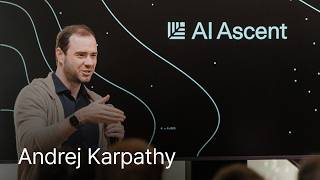
Building reliable agents requires overcoming deep cognitive and architectural hurdles like lack of continual learning and multimodality. Drawing on 15 years of industry experience, Karpathy notes that while these problems are tractable, solving them will realistically take about a decade.
How many agents can a developer effectively manage at once?
Developers cannot manage thousands of agents, but they can effectively multi-monitor a pod of about six to ten agents. This shift requires commanding a team of agents rather than handling raw implementation or multitasking.
How did Andrej Karpathy's coding workflow shift in December?
He noticed that the latest AI models were outputting correct code chunks reliably without needing corrections. This realization led him down a rabbit hole of building endless side projects entirely through prompting.
React reduces UI building down to its theoretical minimum by making components simple JavaScript functions. The return value from this function is your HTML or UI, written in a special syntax called JSX that combines JavaScript with markup. You can pass data into a component by using a props argument which is then referenced inside the function body.
Why are hard skills still necessary if AI can generate code?
Hard skills ensure developers can properly steer AI tools and handle complex logic when models fail. Relying entirely on LLMs limits a developer's skill ceiling to whatever the models can achieve.
Why is tech a better environment for learning in public compared to finance?
Tech operates on positive-sum dynamics where sharing knowledge increases its overall value, unlike finance which is zero-sum. This openness allows practitioners to freely share code and mistakes, whereas finance values secrecy. Consequently, learning in public in tech helps individuals build communities and choose their own path.
How does ULMFiT differ from traditional training approaches?
ULMFiT introduces a three-stage architecture using a general-purpose corpus for pre-training before task-specific supervised fine-tuning. This approach heavily relies on robust regularization techniques and discriminative learning rates across different model layers. Jeremy Howard found that this transfer learning methodology vastly outperformed highly specialized models on classification tasks.
Are developers still valuable despite losing skill value?
Yes, overall developer value has increased because the massive leverage on the remaining skills outweighs the loss of traditional implementation skills. The speaker notes this math ultimately results in a positive outcome for his productivity and value.
What role did military projects play in the early history of software engineering?
Large military projects like the Sage system served as the crucible for modern distributed computing while exposing severe industry limitations. These complex systems consumed massive engineering resources, forcing the industry to confront what was termed the software crisis. This era also saw Margaret Hamilton coin the term software engineering to distinguish software from hardware work.
What does communicating intent effectively to an agent involve?
Communicating intent means focusing on the what and the why of a problem rather than the implementation details. You must clearly define the outcome, who it is for, and outline strict constraints. Failing to do this forces agents to guess, which leads to gaps and corners you cannot get out of.
What defines a product engineer compared to a traditional developer or product manager?
A product engineer acts as a bridge by connecting a deep understanding of customer needs directly to technical choices. Rather than just blindly turning tickets into implementations like an agent, they take ownership of architecture, workflows, and system constraints. They live both in the technology and in the user's world to ensure the software actually solves real human problems.
Why does Kent describe AI coding assistants as a capricious genie?
AI tools grant your wishes for features or code changes, but often in unexpected or perverse ways that do not match your true intent. This dynamic creates an addictive intermittent reinforcement loop similar to playing a slot machine.
How did Yahoo's proprietary tech stack and server allocation policies impact engineering?
Yahoo predated modern open-source libraries and maintained its own forks like Y Apache, YPHP, and Yinst for package management. Because top leadership manually approved server allocations to drive accountability, it inadvertently created a massive black market where teams hoarded outdated, power-inefficient servers.
How should senior engineers approach the current wave of AI tools?
Senior engineers need to maintain absolute skepticism combined with relentless curiosity to properly evaluate new technologies. Instead of accepting hype or rejecting tech outright, you should run the smallest experiments possible to validate claims to your own satisfaction.
Why are large language models described as digital ghosts rather than biological animals?
Animals are shaped by millions of years of evolution and a massive hardware-encoding process that allows newborn creatures to function instantly. In contrast, language models are trained by imitating human data found on the internet, creating an ethereal, spirit-like entity starting from a very different point.
Where should humans draw the line between pure autonomy and required oversight?
The boundary is primarily a matter of trust and quality assurance rather than a technical limitation. Humans still need to be actively involved during the planning and confirmation stages to ensure proper definition and prevent bad outcomes.
What is the core difference between Software 1.0 and Software 3.0?
Software 1.0 relies on explicit rules written by humans, whereas Software 3.0 uses LLMs as interpreters. In the Software 3.0 paradigm, programming shifts to prompting and managing what is inside the context window.
To give a component its own internal state, you can use the state hook, which is a function returning a value and another function to change it. When the state value changes, React automatically reacts to update the UI. You can then bind the state-changing function to user events, like a button click, so the template always shows the most recent value.
How might programming evolve if natural language becomes part of the tool chain?
Programming may continuously evolve toward higher-order or more structured pseudo-languages used for prompting. While this broadens the pool of people who can write software, it also exponentially increases the amount of code that needs to be maintained.
How did the term AI engineer originate and why was it chosen?
The term emerged after realizing that non-technical people could only prompt, whereas software engineers could control many AIs at once using harnesses. The creator focused on developer identity rather than job tasks, providing a professional title that aligned with their career aspirations. This helped establish a distinct industry discipline and community for developers integrating AI.
Why do language models fail when pushed outside their training distribution?
Language models operate by fitting complex curves across massive multidimensional training data, meaning they rely on interpolation rather than true reasoning. When a prompt pushes the model outside this known distribution, its representations collapse and it loses basic understanding. Thus, what appears to be creativity is merely compositional interpolation of existing human knowledge.
How long did it take to figure out what skills remain valuable?
It took about two years for it to start becoming clear which specific skills retained and grew their value. Initially, the answer to what those valuable skills were was completely unknown.
How does Booch characterize the three golden ages of software engineering?
Software engineering evolved through three distinct golden ages driven by a continuous rise in abstraction levels. The first golden age focused on algorithmic abstractions to handle mathematical calculations using higher-order languages. The second golden age introduced object-oriented design and classes to manage exploding system complexity, while the third golden age shifts abstraction upward to entire packages, platforms, and frameworks.
How do I verify that an agent builds what I actually intend?
Instead of reviewing raw code line by line, you should encode your intent directly into automated tests. Give the agent a mechanism for verifying its own work against those tests. This collaboration makes the agent much more effective at building the right thing.
Why do AI coding agents risk making software products worse if used carelessly?
AI agents lack the human judgment to push back on scope creep and will rapidly accelerate bad practices and system bloat throughout a codebase. Because agents execute instructions so quickly, they can easily build the wrong thing at high velocity without pausing to check edge cases or scalability. Developers must actively slow down and exercise systems thinking to wrangle agents and maintain product quality.
Mundane implementation details and syntax memorization become largely irrelevant because AI handles boilerplate and package management. Instead, architectural vision, setting milestones, and managing system complexity become vastly more leveraged skills.
Why did the Dig v4 rewrite launch lead to severe technical outages?
The team made aggressive technical decisions by adopting Cassandra to replace sharded MySQL without proper load testing beforehand. The system suffered from critical performance failures and a memory leak caused by a mutable default parameter in a Python API service.
Will AI replace programmers or how will it affect different career stages?
AI acts as an amplifier rather than a wholesale replacement for developers. It creates a golden age for junior programmers who learn fast, while putting pressure on the middle tier who may struggle to find their footing amid broader economic headwinds.
How does in-context learning function as a working memory during inference?
Pre-training compresses massive amounts of internet text into weights, representing only a hazy recollection of training data. Conversely, tokens placed in the context window build up representations that are directly accessible to the neural net, acting like working memory.
Why is the term agent workflow considered an oxymoron?
Workflows enforce a rigid path that strips the AI of its ability to make independent decisions. True agentic systems require full autonomy and proactivity rather than deterministic execution with AI sprinkled in.
How does installing Open Claw demonstrate the Software 3.0 paradigm?
Instead of executing a complex shell script designed for various platforms, the installation relies on a simple snippet of text copied into an agent. The agent uses its own intelligence to inspect the environment and execute the setup loop.
Does React handle routing and state management out of the box?
React itself does not care about routing, state management, animation, or similar concerns. Instead, it lets those concerns evolve naturally within the open source community. As a result, a massive ecosystem surrounds the library with countless supporting options for static sites, server-side rendering, and forms.
What separates human developers from coding agents when building software?
Human developers possess an intrinsic care for the craft and the taste required to know when something is truly right. AI agents simply complete tasks to a given prompt without striving for continuous self-improvement or aesthetic excellence.
How are coding agents threatening mid-tier B2B software companies?
Modern coding agents can independently click through and replicate software screens, enabling developers to clone expensive SaaS platforms rapidly. Business owners paying thousands for rigid mid-tier SaaS can now hire someone to build custom open-source alternatives for a fraction of the cost. As a result, mid-tier SaaS companies risk losing their customer base unless they pivot to building specialized agents or data vendors.
What is the main issue with relying on vibe coding for software development?
Relying on AI coding tools creates a false illusion of control and productivity while leaving developers with code nobody truly understands. Studies show that vibe coding often decreases actual shipping productivity and introduces severe long-term maintenance risks. Software engineering requires rigorous design and understanding rather than blindly pulling a slot machine lever.
What types of skills are becoming more leveraged today?
High-level decision-making skills are becoming significantly more leveraged with augmented development tools. These architectural and directional choices replace lower-level coding tasks.
How have economic shifts changed software development practices over time?
Early software engineering used rigid processes like waterfall because machine costs heavily outweighed programmer costs, requiring extensive upfront design on paper. Today, reversed economics make machine time cheap, so developers sit directly in front of machines to build disposable or durable software depending on risk.
How does Warp Build help handle concurrency limits with coding agents?
Warp Build provides unlimited concurrency so your coding agents do not have to wait in line for available runners. By making a single change to GitHub action files, it delivers faster pipeline speeds at a lower cost. It also includes features like unlimited caching for artifacts and npm packages.
Why is making the right architectural choices so expensive to fix later?
Changing architecture later is expensive because of its broad impact on both the rest of the team and the user experience. Because rework introduces high friction and resource costs, hiring engineers who understand product context and make the right choices initially is much more efficient. Relying on good initial primitives prevents costly refactoring down the road.
It emerged from a series of workshops to offer an economic and human-centric alternative to rigid, phased waterfall development. The goal was to reach the early majority with a standard framework emphasizing rapid feedback loops and continuous iteration.
How has the expectation for engineering managers making technical decisions shifted over time?
In the 2010s, engineering managers were explicitly taught never to make a technical decision again and to let go of technology choices. Today, modern engineering leaders are no longer restricted from technical leadership, and roles like CTO require being deeply involved in technical details. This convergence allows leaders to bridge both managerial and technical domains effectively.
What are the major risks enterprises face when adopting AI agents?
Large enterprises face massive security risks when blindly granting AI models autonomous control over sensitive systems like email. The rush to deploy unvetted agents in complex legacy codebases invites catastrophic failures that could easily take critical infrastructure offline.
Why are coding agents ineffective at building unique codebases?
Agents rely heavily on common patterns from their training data and fail to internalize custom architectures. They often inject unnecessary boilerplate code or misunderstand custom routines, making them a net negative for complex development tasks.
How do coding agents impact delivery time and lifetime value for agency clients?
While coding agents can reduce true production-grade system development time by about a third, client lifetime value remains strong. Instead of shortening projects, teams simply ship more features by pulling directly from the growing backlog. Clients ultimately receive vastly more functionality under steady monthly retainer models.
Why does verifiability explain the jagged capabilities of current AI models?
Frontier labs train models using reinforcement learning environments driven by verification rewards. This training causes model capabilities to peak sharply in verifiable domains like code and math while lagging elsewhere.
Can I use React skills for mobile app development?
Once you have learned React, you can easily jump into React Native to start building mobile apps. Furthermore, knowing this UI library is currently one of the most in-demand skills for front-end developers.
What kind of practical friction do current coding agents encounter?
Coding agents struggle with the balance of prompt specificity, often requiring too much back-and-forth rewriting. Developers frequently find it faster to learn tools like Tailwind and write the code themselves rather than constantly correcting agent outputs.
How does the AI Engineer conference expand globally through local franchises?
The conference scales internationally by partnering with local teams in different countries, mirroring the JSCON franchise model. Local organizers handle regional execution and community building while agreeing to follow code-of-conduct standards and brand guidelines. This approach allows global markets to host high-quality engineering conferences tailored to their specific regions.
Why doesn't generating 90% of code with AI make engineers proportionally more productive?
Typing code was never the primary bottleneck in software engineering, echoing Fred Brooks's observation that writing code is only a fraction of the work. Delegating design to LLMs often results in superficial solutions modeled on surface-level similarities rather than novel engineering.
Is carefully crafting functions as valuable as it used to be?
No, the leverage of meticulously crafting a single function has decreased considerably. Writing code by hand is no longer the primary driver of developer value.
Why are large language models considered incapable of abductive reasoning?
Large language models rely on induction and extrapolation from existing data rather than generating novel underlying theories. For instance, they cannot discover entirely outside-the-box concepts like viruses if those fall outside their training data. Consequently, they act as unreliable narrators that require careful human oversight.
What is the adjacent possible and why does it matter for developers?
The adjacent possible describes the set of next steps that only become unlocked once a prior foundational step exists, like the iPhone enabling DoorDash or Git enabling GitHub. Agents act as a new printing press, opening up completely new doors for software. Developers who watch for these shifts can spot new opportunities instantly.
How should I interview software engineers for product engineering roles?
You should avoid traditional coding tests that prohibit AI agents, as those do not evaluate real-world execution. Instead, interview candidates by discussing core problem discovery and the system implications that follow. This reveals whether they understand how to map user needs to robust system architectures.
Kent Beck invented TDD as a conceptual blend of vintage tape application workflows and his Smalltalk testing framework. Reading about typing expected output tapes before writing transformation programs inspired him to write expected values before code. This process transformation dramatically reduced his programming anxiety.
How did Zero Interest Rate Policy change engineering management styles?
ZERP shaped a decade of management bloat where perks, hiring throughput, and employee retention became the primary focus. Because managers were discouraged from making technical decisions, they overindexed on process solutions and headcount. This created bloated organizations and shifted priorities until the environment changed around 2022.
How does the shift to AI impact team structures and collaboration?
There is a dangerous trend toward resoloing programming where individuals manage multiple agents in isolation rather than communicating with peers. However, maintaining collaborative structures like pairs or teams interacting with genies yields far better results than one person managing many agents alone.
What makes outcome-based reinforcement learning so inefficient?
Outcome-based RL takes a final reward signal and blindly upweights every single token in a long trajectory, assuming every step was correct. This creates massive noise because incorrect steps taken along the way are reinforced just because the final answer was right.
Why are development agencies shifting toward a law firm model?
As individual developers become capable of running their own software factories, agencies must share revenue or offer partner tracks to retain top talent. Without a VC-backed hypergrowth exit strategy, offering a cut of revenue from client pods prevents developers from leaving to start solo firms. This model successfully aligns business interests and keeps builders motivated long-term.
What distinguishes vibe coding from agentic engineering?
Vibe coding raises the floor for everyone by letting non-engineers build software quickly. In contrast, agentic engineering treats AI use as a disciplined engineering practice that maintains professional quality and security bars.
Why is automated debugging particularly difficult for AI systems?
Debugging requires deep context, intuition, and experience operating under uncertainty rather than basic text prediction. Because models rely on surface-level pattern matching, they often flag impossible security flaws or miss complex edge cases.
Why is it a good time for business owners to build custom software?
Business owners face high subscription costs for sluggish off-the-shelf software that fails to meet their exact needs. By leveraging coding agents, they can spend a fraction of that budget to build self-maintaining internal tools tailored precisely to their workflows. This drastically increases employee productivity and bypasses traditional software vendor lock-in.
What are the long-term risks of relying on AI for daily coding tasks?
Blindly relying on AI tools creates understanding debt and erodes organizational knowledge because developers miss out on the friction required for true learning. Without desirable difficulty and active struggle, developers risk cognitive atrophy and personal obsolescence.
Why did crafting functions have intrinsic and extrinsic value in the past?
In the past, writing understandable functions had intrinsic personal value for the craftsperson taking pride in their work. It also had extrinsic value because other people could read and comprehend the code more easily.
What classic books does Grady Booch recommend for systems engineers?
Booch recommends several enduring texts that have shaped systems engineering and project management thinking. Key recommendations include Herbert Simon's The Sciences of the Artificial and the classic insights found in The Mythical Man-Month.
How can I make my career anti-fragile against AI advancements?
Anti-fragile careers actually grow stronger when shaken by industry shifts rather than breaking under pressure. Instead of relying on a single ephemeral skill, you must constantly look for the adjacent possible. Being close to real people with real problems positions you to walk through newly opened doors.
What kind of questions should I ask users during early idea validation?
You should ask about past behavior, specific workarounds, and prior costs instead of fishing for compliments or asking hypothetical future questions. Since nobody can predict the future, understanding what users did previously reveals true pain points. Uncovering active workarounds provides strong evidence of a problem worth solving.
Is there actually any room for design when practicing TDD?
Critics argue TDD ignores upfront architecture, but practitioners constantly bounce between abstraction levels. Writing a test forces a moment of design to determine the API interface before implementation details are locked in. Once a test turns green, developers get a release of tension to think about broader design and refactoring.
Why are structured career ladders and rubrics still necessary?
Structured career ladders and rubrics are necessary because research shows they drive fairer decisions than having no rubrics at all. Without them, companies tend to undervalue essential maintenance and glue work while overemphasizing flashy projects. However, rubrics should guide decisions rather than replace managerial judgment during promotions.
How does good developer experience relate to agent experience?
The Venn diagram of developer experience and agent experience is effectively a circle. Practices like well-modularized code and strong testing make it significantly easier for both human developers and AI agents to work effectively.
Why does synthetic data generation fail when models train on their own outputs?
Model-generated outputs suffer from silent collapse, occupying a very narrow manifold of possible thoughts rather than maintaining true data entropy. Training repeatedly on this collapsed distribution causes the model to degrade and lose diversity.
How should the hiring process change for agentic engineers?
Traditional coding puzzles belong to the old paradigm and no longer test modern skills effectively. Companies should instead give candidates large, open-ended projects to implement, secure, and defend against automated attacks.
What new attack vectors or security concerns are emerging from AI usage?
Attackers can use LLMs to generate fake bug reports and flood open-source maintainers with noise, creating a denial of attention. This aggressive format introduces novel security challenges and malicious supply chain risks.
What makes System 1 models different from traditional LLM chat architectures?
Instead of treating large language models as a separate chat window or harness where you wait for complex reasoning, System 1 models are embedded directly into normal code paths. They act casually like programming if-statements to make quick choices and estimate probabilities. This approach prioritizes reliability and speed by using smaller models everywhere rather than relying on one monolithic chatbot.
Why do AI coding sessions often feel psychologically addictive?
AI coding mirrors the mechanics of a slot machine, featuring an illusion of control through prompt engineering and stochastic wins. Developers experience high-intensity marathons driven by occasional successes, leaving them mentally drained and detached from actual code comprehension.
Does writing readable code still hold the same leverage today?
The leverage of conveying code mechanics to human readers has gone down as AI tools have changed how code is consumed and understood. The traditional audience of human readers is no longer the primary bottleneck.
Why should I focus on everyday industries rather than just shiny tech?
While building trendy apps is fun, everyday industries like dental offices often rely on awful, painful software. These domains offer massive amounts of real-world opportunity because agents make implementation much cheaper. Focusing on these spaces allows you to solve genuine human pain points.
How can TDD be used effectively when working with AI coding agents?
Tests act as immutable guardrails that prevent AI agents from making disruptive changes across a codebase. Because AI tools lack architectural taste and often introduce regressions, maintaining a fast suite of tests allows you to catch accidental breakages instantly. You can feed expected values as immutable assertions to keep the agent aligned.
How should engineering managers handle critical path crises?
Instead of adding headcount to a late project, which destroys small ownership pods, managers should keep durable high-ownership teams focused on the problem. They can ask for short-term commitments and extra hours from the team while removing bureaucratic distractions. This prevents the constant organization-wide panic and burnout seen in reactive staffing surges.
How should I adapt my day-to-day coding habits given the rise of AI?
Developers must let go of the micro-satisfaction of writing individual functions by hand and shift focus toward domain understanding. Building a precise language to communicate domain models with agents provides much higher leverage than manually crafting code.
Why is human forgetfulness or lack of memorization considered a feature rather than a bug?
Humans are poor at memorizing random strings, which forces them to learn generalizable patterns rather than getting distracted by exact details. In contrast, LLMs memorize pre-training data too well, which can encumber abstract reasoning. Stripping away excessive memory to create a lightweight cognitive core is seen as a way to improve reasoning.
What human skills become more valuable as agents handle more coding details?
Humans must remain in charge of taste, aesthetics, high-level design, and system specs. While agents write boilerplate and handle API syntax, developers ensure the underlying architecture makes logical sense.
How do developers view AI productivity benefits according to the Stack Overflow survey?
The vast majority of survey respondents report favorable sentiment and agree that increased productivity is the biggest benefit of AI tools. However, very few developers highly trust AI outputs, reflecting a healthy dose of skepticism.
How should technical and research-oriented founders approach go-to-market strategy?
Technical founders often make the mistake of treating marketing as a minor last-minute task right before a product launch. Instead, they must integrate go-to-market thinking early in the process to understand their target audience and pitch correctly. Partnering with someone focused on marketing helps bridge the gap between building great technology and finding product-market fit.
How effectively can advanced LLMs debug massive, unfamiliar legacy codebases?
Advanced models like GPT-5.3 Pro can successfully fix complex, multi-threaded legacy issues after hours of iterative prompting. However, this creates a dangerous maintenance risk because no human truly understands the resulting code.
Do we fully understand the new limits and circumstances of these skill shifts?
No, developers are still figuring out the exact degree and context of these changes. The industry is actively discovering the boundaries of where leverage has shifted.
Why will human accountability remain scarce and valuable?
Agents cannot be fired, sued, embarrassed, or hold real legal responsibility for software outcomes. Centralized systems like banks, airlines, and government portals will always require a human who owns the outcome. As building software becomes easier, human trust and accountability become scarce and highly valued.
Why didn't early Facebook engineers need TDD to maintain code quality?
Early Facebook engineers operated in an environment with rapid feedback loops, including local dev servers, incremental rollouts, and rich observability. Programmers took ultimate personal responsibility for their code because they felt the pain of their own production mistakes. With high ownership and immediate feedback, writing traditional unit tests was unnecessary.
What makes complex domain businesses resilient against AI tools?
Businesses dealing with intricate domain contexts, strict regulations, and extensive audit requirements retain strong defensibility despite new AI tools. The difficulty lies not just in writing code, but in handling deeply specific rules, third-party relationships, and legal edge cases. These details require deep domain knowledge that generic AI harnesses struggle to capture automatically.
What historical tech shifts compare closest to the rise of AI?
The introduction of the microprocessor serves as the closest historical analogy to AI's disruptive magnitude. It fundamentally expanded human imagination by making computing cheap and enabling ridiculously ambitious projects.
Why do frontier models lack high output diversity if it causes synthetic data issues?
Most practical applications do not demand high output diversity, and high creativity or divergence is often actively penalized or harder to evaluate. Therefore, labs do not optimize models to maintain high entropy, which in turn creates bottlenecks when trying to leverage synthetic data generation. Controlling output distributions without drifting too far from training data remains a tricky problem.
Why does Karpathy describe AI models as ghosts rather than animals?
Models lack intrinsic motivations, curiosity, or fun derived from evolution. They are statistical simulation circuits shaped by pre-training and reinforcement learning rather than living entities with feelings.
What legal and licensing risks are associated with AI training data?
Many models are trained on codebases that include GPL-licensed software without explicit rights. If regulations forced companies to open-source models that produced potential GPL code, it could trigger massive industry-wide panic.
How do you define product taste when building software?
Taste is the ability to quickly and cheaply narrow down a massive set of potential product directions to the few options that are obviously correct. Rather than brute-forcing every possibility, a tasteful founder intuitively discards bad paths and zeroes in on what works. This often means making bold, definitive choices that others eventually end up copying.
How well do LLMs handle complex software engineering tasks?
LLMs are empirically poor at software engineering because they struggle to move outside their training data to build novel systems. While they can perform well on coding tasks, they mostly produce obvious copies of existing software like compilers or browsers.
How should developers balance learning new tech with going deep into a domain?
You should avoid chasing every shiny new tech trend and instead pick your people and problems intentionally. Spend a small, deliberate slice of your time experimenting with shiny tools to maintain surface-level awareness. Then, go deep into a specific domain where you see real opportunities matching user problems.
How do feature flags help manage risk at massive scale?
Feature flags enable developers to deploy a single software artifact containing multiple modes that can be gradually ramped up. This provides a safe subdeployment mechanism where you can test features on a subset of users and quickly turn them down if error rates increase. It removes deployment anxiety by letting you observe behavior live before full release.
What combination of skills makes an effective engineering executive?
Effective executives need both deep technical understanding and strong bureaucratic skills. Traditional middle management often selected for bureaucratic navigation while losing touch with technology, whereas line managers retain better technical instincts. A modern executive must master both to structure functions and allocate effective processes.
Why does coding dominate API revenues compared to other general knowledge work domains?
Coding has always been centered around text and computer terminals, which aligns perfectly with how LLMs process information. Furthermore, the software ecosystem already has robust infrastructure like IDEs and diff viewers to display and integrate model outputs. Other text-heavy or visual domains like slides or writing lack this pre-built infrastructure, making economic extraction much harder.
What does agent-native infrastructure look like in practice?
Workloads are decomposed into sensors and actuators designed to be legible to LLMs first. This means documentation, APIs, and deployment pipelines are built so developers can command agents directly rather than doing manual configuration.
Why do interactive stateful environments improve AI-assisted coding?
Traditional terminal-based AI tools rely on meager text files, whereas rich stateful environments like Python interpreters let humans and AI manipulate objects in real time. This interactive feedback loop fosters deep human understanding, rapid testing, and a sense of fulfillment rather than disconnection.
What are the options for middle managers facing industry downsizing?
Middle managers face a stark choice between reskilling or risking irrelevance as their roles are flattened. To adapt, leaders can take lateral or backwards steps into line management to get back into the details of building software. Will Larson exemplifies this by moving from leading 250 people at Carta to a 25-person team at Imprint.
How does Karpathy view superintelligence in relation to historical automation?
Superintelligence is viewed as a natural continuation of historical automation and computing progress rather than a distinct technological discontinuity. Although it will accelerate digital and eventually physical automation, it follows the same smooth, continuous economic growth trends. This exponential progression will eventually lead to a foreign environment and a gradual loss of human understanding and control.
Why is human understanding the ultimate bottleneck in the age of cheap intelligence?
While you can outsource your thinking and data processing to AI, you cannot outsource your understanding. Humans must retain comprehension to direct agents effectively and know what problems are worth solving.
How can we make Jupyter notebooks friendly with Git version control?
Notebooks are inherently git-friendly, but standard Git only ships with merge drivers for line-based text files. By plugging in a custom merge driver for JSON files or using custom tools, developers can easily achieve cell-level diffs and clear conflict resolution.
Why is high-volume AI writing inferior to authentic technical writing?
High-volume AI writing lacks genuine perspective and fails to drive real industry impact. Building lasting leverage requires spending significant time developing deep, memorable ideas rather than churning out content mills. Writers who rely on AI slop risk destroying decades of carefully built professional reputation.
Does Karpathy expect an intelligence explosion to break historical GDP growth trends?
Karpathy predicts that AI progress will follow continuous historical exponential growth trends rather than causing a sudden hyper-exponential jump in global GDP. He compares AI adoption to past technologies like computers and mobile phones, which slowly diffused and averaged into the same long-term economic growth patterns.
Why is centralized AI power a major existential threat?
Focusing solely on autonomous AI doomsday scenarios pushes society to centralize power into the hands of tech monopolies or governments. This power centralization invites power-hungry actors to monopolize the technology and control society, posing a much more immediate structural threat.
Why does Karpathy argue that current LLMs are not yet capable of building an autonomous civilization?
Current language models lack the key components of culture and self-play that drive true autonomous systems. Karpathy notes that they act more like savant elementary school students with perfect memory rather than agents sharing a growing repertoire of knowledge or generating increasingly difficult training problems for each other.
What is the most significant actual risk of current AI technology?
While privacy and surveillance risks exist, they are largely extensions of existing corporate and government practices rather than being uniquely created by AI. The most concerning risk is human enfeeblement, where people lose their capacity to build competence and understanding over time.
What lessons does self-driving development offer for deploying AI code into production?
Drawing from his five years at Tesla, Karpathy explains that self-driving and production-grade software share a massive demo-to-product gap because the cost of failure is extremely high. Overcoming this requires a grueling march of nines where every additional nine of reliability demands a constant amount of rigorous iteration and patching.
Why are the economics of deploying LLMs so much more favorable than self-driving cars?
While physical systems like self-driving cars face massive capital expenditures and maintenance costs, digital bits can be easily reshuffled and scaled. The operational cost of an LLM session is quite low, allowing infrastructure expenses to be amortized directly into the training run.
Why isn't it the right time to build an automated AI tutor yet?
Human tutors set an extraordinarily high bar by instantly understanding a student's world model and tailoring prompts to their exact capability sliver. Current LLMs completely lack the capability to replicate this nuanced, adaptive one-on-one tutoring experience reliably.
What does it mean to build ramps to knowledge in technical education?
Education is a hard technical problem of designing simplified full-stack artifacts that maximize understanding per second. By structuring material so each concept strictly depends on the previous one, students are never stuck and stay appropriately challenged.
How do physics backgrounds and first-order approximations help in teaching complex systems?
Training in physics teaches you to strip a system down to its fundamental components and build models using first-order approximations. For instance, micrograd reduces neural network training to just 100 lines of Python code, separating the core intellectual piece from efficiency concerns.
How can educators overcome the curse of knowledge when explaining difficult topics?
Experts often suffer from taking things for granted and using overly abstract, jargon-filled language. Communicating casually—like explaining an idea to someone over lunch—forces you to state the central concept clearly and accurately.
 ▶ 0:06
Kent Beck: 90% of My Skills Went to $0 Overnight (and I'm More Valuable Than Ever)